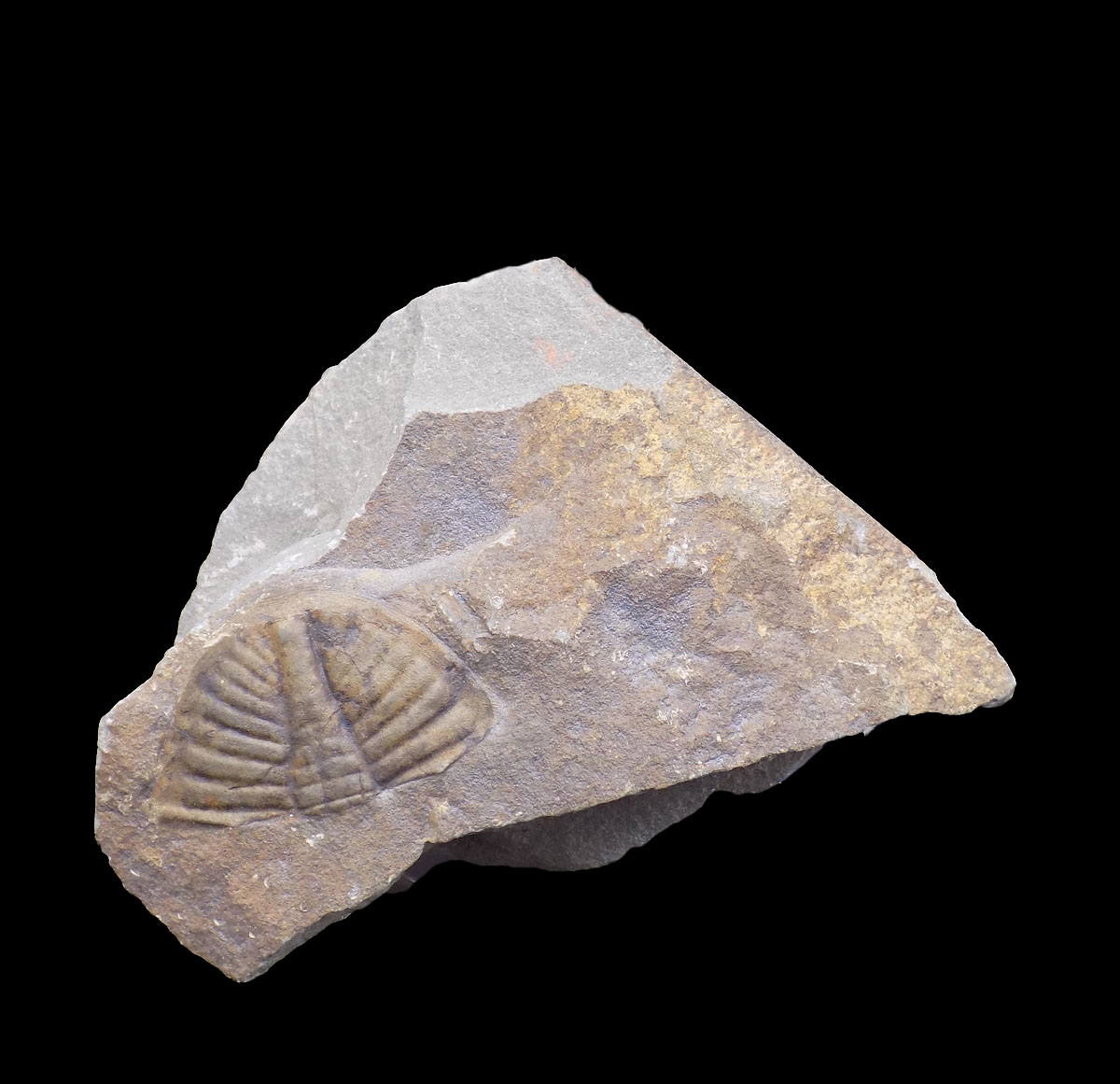
Ogyginus sp are a well known species of British trilobite, found particularly in Wales. These fossils detail only the pygidium (tail) of the animal within a hard fine grained mudstone matrix during the Llanvirn series of the Ordovician period. It is currently believed that the reason so many tails of the species are present is because trilobites (like modern day arthropods, including numerus insects and crustaceans such as crabs and lobsters) moult/shed their outer most carapace (layer) in order to continue growing, in order to do this, the trilobites likely anchored their pygidiums to the sea floor so that they could essentially ‘wriggle’ out of their old carapace and solidify their new one underneath. It is likely that this twisting and moving during the moulting process led to the tail piece of the carapace to separate from the rest of the body and thus often fossilised alone with the thorax and head fossilising elsewhere. Overall, these are excellent, well preserved samples of the Ogyginus (most likely Ogyginus corndensis species) and are suitable for collectors as well as enthusiasts and for educational use in order to teach modes of behaviours that fauna exhibited hundreds of millions of years ago and how such behaviour has descended through time to modern animals. Such samples of British fossils are increasingly hard to find nowadays and these are quite good examples, with the pygidiums themselves ranging between 15 to 20 mm wide on a mudstone matrix of optional sizes. Each piece will come supplied in a white card tray with an information label.